Home » Course » B.Des. / B.Sc. Fashion & Textile Design at LISAA
Explore B.Des. / B.Sc. Fashion & Textile Design at LISAA. Build creative & technical skills with hands-on training, expert guidance, & strong career support.
Course Duration
3 Years
B.Des. / B.Sc. Fashion & Textile Design
Fashion today is more than just clothing, it’s a combination of creativity, culture, technology, and functionality. The B.Des. / B.Sc. Fashion & Textile Design program at LISAA School of Design is built to help you understand this evolving space and find your place within it. If you’re someone who notices details in fabrics, colors, and styles, this course will help you shape that interest into a professional skill.
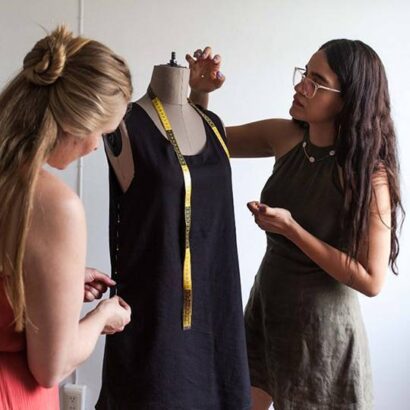
The program introduces you to the fundamentals of design while gradually taking you into more advanced concepts like textile innovation, pattern making, and fashion styling. And the learning under the B.Des. B.Sc. Fashion & Textile Design is practical and structured. Instead of only focusing on theory, you’ll work on assignments, design projects, and case studies that reflect real industry scenarios. This helps you understand what it takes to create designs that are not only visually appealing but also functional and wearable.
Programme Objectives of B.Des. / B.Sc. Fashion & Textile Design
The B.Des. / B.Sc. Fashion & Textile Design program is structured to provide students with a balanced understanding of creativity, craftsmanship, and industry relevance. At LISAA School of Design, the focus is on helping students translate their interest in fashion and textiles into practical skills that can be applied in professional settings. Students are guided through every stage of the design process, from research and ideation to execution and presentation. Emphasis is placed on hands-on learning, critical thinking, and problem-solving. The program also integrates aspects like sustainability and innovation to ensure students are prepared for the evolving demands of the fashion industry.
Comprehensive Understanding of The Design Process
Students are guided through every stage of the design journey, starting from research and concept development to final execution and presentation.
They learn how to translate abstract ideas into practical designs by following a structured and logical workflow.
The program helps students understand the importance of planning, sampling, prototyping, and refining their designs before final production.
Exposure to real-world processes ensures that students are familiar with industry practices and timelines.
Enhance Skills in Fabric Selection & Application
Students develop the ability to identify different types of fabrics and understand their properties, textures, and performance.
They learn how to select materials that align with the purpose of the design, whether it is for comfort, durability, or visual appeal.
The program teaches how fabric behavior influences garment construction, fit, and overall design outcome.
Students also gain hands-on experience in applying textiles creatively through surface design and fabric manipulation techniques.
Encourage Innovation & Experimentation
Students are encouraged to explore new concepts and push beyond conventional design approaches to create original work.
The program promotes the use of diverse materials, techniques, and tools to expand creative possibilities.
They are guided to take calculated creative risks, helping them discover their unique design voice.
Regular projects and assignments provide opportunities to test ideas, learn from mistakes, and refine their creative process.
Prepare Students for Portfolio Development
Students are trained to document their design process, from initial sketches to final outcomes, in a clear and professional manner.
The program helps them curate and present their best work to highlight their strengths and areas of expertise.
Guidance is provided on layout, storytelling, and visual presentation to ensure the portfolio is engaging and impactful.
By the end of the course, students have a well-structured portfolio that meets industry expectations and supports career opportunities.
Build Confidence for Professional Opportunities
Continuous feedback from faculty helps students improve their work and gain clarity in their design approach.
Students are exposed to real-world scenarios, which prepares them to handle professional challenges with confidence.
The program encourages effective communication and presentation skills, enabling students to express their ideas clearly.
With practical experience and a strong portfolio, students feel more prepared to pursue jobs, internships, or entrepreneurial ventures.
The B.Des. / B.Sc. Fashion & Textile Design program at LISAA School of Design is open to students who have a strong interest in creativity, design, and visual expression. The eligibility criteria are designed to ensure that applicants have the basic academic foundation as well as the interest and aptitude required to pursue a career in fashion and textile design. The basic criteria for eligibility is
Completion of 10+2 or Equivalent Education Applicants must have successfully completed their higher secondary education (10+2) from a recognized board, irrespective of the stream (Science, Commerce, or Arts).
Open to Students from All Academic Backgrounds The program does not restrict applicants based on their previous field of study, allowing students from diverse backgrounds to apply.
Basic Interest in Fashion, Textiles, or Design Candidates should demonstrate a genuine interest in fashion, fabrics, creativity, or visual design, even if they do not have formal training.
Creative Aptitude and Observation Skills Applicants are expected to have an eye for detail, an ability to observe trends, and a willingness to think creatively.
Portfolio While not always mandatory, submitting a portfolio of sketches, artwork, or creative projects can strengthen the application and showcase potential.
Willingness to Learn and Experiment A strong motivation to explore new ideas, materials, and techniques is essential to succeed in the program.
Career Paths You Can Choose After A B.Des. / B.Sc. Fashion & Textile Design
A B.Des. / B.Sc. in Fashion & Textile Design opens up a wide range of career opportunities across creative and technical fields within the industry. The program equips students with the skills, knowledge, and practical exposure needed to explore different roles based on their interests and strengths. Whether you are inclined towards designing, styling, research, or business, the fashion and textile industry offers diverse paths to build a fulfilling career.
Fashion Designer
Textile Designer
Fashion Stylist
Apparel Merchandiser
Fashion Illustrator
Costume Designer
Fashion Buyer
Textile Research
Development Specialist
Fashion Brand Owner
Placement Support Offered At LISAA’s B.Des. / B.V.A. Interior, Spatial & Product Design
Placement Support Area
Description
Portfolio Development Guidance
Students receive structured support in creating professional portfolios that effectively showcase their design skills, concepts, and project work.
Resume & Profile Building
Guidance is provided to help students create strong resumes and professional profiles aligned with industry expectations.
Industry Exposure
Workshops, guest lectures, and industry interactions help students understand real-world practices and career opportunities.
Internship Opportunities
Students are assisted in securing internships that provide hands-on experience and industry exposure before graduation.
Placement Assistance
The institute connects students with potential employers, design firms, and studios to support job placements.
Interview Preparation
Training sessions are conducted to help students prepare for interviews, including communication skills and presentation techniques.
Career Guidance & Mentorship
Continuous mentorship helps students identify suitable career paths based on their strengths and interests.
Industry-Ready Skill Training
The program focuses on building practical and technical skills required to meet current industry demands.
Frequently Asked Questions
What is the difference between B.Des. Fashion Design and B.Sc. Fashion Design?
B.Des. focuses more on creative design, conceptual thinking, and innovation, while B.Sc. emphasizes technical knowledge, production processes, and practical application.
Is prior experience in fashion or design required to apply?
No, prior experience is not mandatory. A strong interest in design, creativity, and willingness to learn is sufficient.
What skills are important for a career in fashion or textile design?
Creativity, attention to detail, understanding of fabrics, sketching ability, and basic technical knowledge are important.
What are the benefits of studying a B.Des. / B.Sc. Fashion & Textile Design in a city like Bangalore?
You get exposure to industry trends, networking opportunities, events, and practical learning experiences.
Are internships included in LISAA’s B.Des. / B.Sc. Fashion & Textile Design?
Yes, students are guided and supported in securing internships as part of their learning experience.