



Have you ever looked at a beautiful outfit and wondered how a few pieces of fabric turn into something you can wear? The secret often begins with a sewing pattern. Learning to understand patterns helps beginners turn creative ideas into well-fitted garments. From reading pattern markings to cutting fabric and stitching different pieces together, every step builds an important fashion skill. If you are starting your fashion journey, learning sewing patterns is a great way to develop your creativity and confidence.
A sewing pattern is a guide that helps you cut fabric into the right shapes and sew those pieces together to create a garment. Think of it as a map for making clothes. Once you understand how to read it, designing and stitching your own outfits becomes much easier.
For anyone interested in fashion design, sewing patterns are more than instructions. They are an introduction to how clothing is planned, developed, and brought to life.

You do not need an expensive sewing room to begin learning. A few essential tools can help you practise comfortably at home or during a beginner fashion course.
A measuring tape helps you take accurate body measurements, including the bust, waist, hips, shoulders, and desired garment length. Learning to measure correctly is important because even a small difference can affect how a garment fits.
Use sharp fabric scissors to cut fabric smoothly. Avoid using the same scissors for paper patterns because paper can dull the blades. Clean, accurate cuts make it easier to match the pieces during stitching.
Pattern paper allows you to trace, draft, and modify patterns. A pencil helps you mark measurements, seam allowances, darts, and other construction details. Beginners can also use commercial patterns before learning to draft their own.
Pins and clips hold fabric pieces together before stitching. They help prevent fabric from shifting, especially when working with curved edges, sleeves, and seams.
A basic sewing machine is useful for practising straight stitches and assembling garments. You should also keep needles, thread, a seam ripper, and a small pair of thread scissors nearby. Hand stitching is equally useful for learning simple finishing techniques.
Before starting a project, arrange your tools neatly. A well-organised workspace saves time and helps you focus on understanding the pattern instead of searching for supplies.
Step 1: Read the instructions first. Before cutting anything, look through the entire pattern guide. Identify the order in which the garment pieces need to be assembled.
Step 2: Find the correct size. Commercial patterns may include several sizes on one sheet. Compare your body measurements with the pattern’s size chart rather than choosing a size based only on the size you usually purchase in shops.
Step 3: Identify the required pattern pieces. A basic skirt may need only a few pieces, while a jacket can have many. Check the cutting layout to understand which pieces you need.
Step 4: Check the seam allowance. Some patterns include seam allowances, while others require you to add them. Always read the instructions to avoid cutting pieces too small.
Step 5: Follow the markings carefully. Grainlines, notches, darts, and fold lines all affect the final result. Mark them clearly on your fabric using suitable fabric chalk or a washable marking tool.
Do not worry if you need to read the instructions more than once. Learning pattern terminology takes practice, and it is perfectly normal to make mistakes while you are getting started.
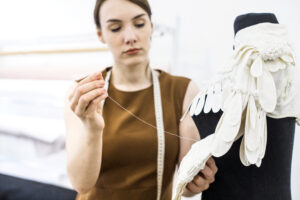
The easiest way to learn sewing patterns is to start with a simple project and practise one skill at a time. Avoid choosing a complicated outfit for your first attempt. A basic project will help you understand the process without feeling overwhelmed.
Start with a simple tote bag, cushion cover, elastic-waist skirt, or basic top. These projects generally have fewer pattern pieces and do not require advanced fitting techniques. Choose something you would genuinely enjoy making because finishing a useful item can motivate you to continue learning.
Measure the relevant parts of your body or the intended finished item. Keep the measuring tape comfortably positioned without pulling it too tightly. Write down the measurements and compare them with the pattern size chart.
Remember that garment measurements and body measurements are not always the same. Clothing often needs extra room for movement, which is known as ease.
Place your pattern paper on a flat surface and trace the required size if you want to preserve the original pattern. Transfer important markings, including darts, notches, and the grainline. Label each piece clearly so you know which part belongs to the front, back, sleeve, or other section.
Wash and dry your fabric first if it is likely to shrink. Press it with an iron, then lay it flat according to the cutting instructions. Position the pattern pieces along the correct grainline and pin them securely before cutting.
Take your time during this stage. Rushing can lead to incorrectly shaped pieces that are difficult to correct later.
Follow the pattern instructions in order. Practise straight seams first, then move on to curves, hems, and other details. Try the garment on when appropriate before completing the final finishing steps.
After stitching, inspect the fit and finish. Are the seams even? Does the garment sit comfortably? Are the edges neat? These observations will help you identify what to improve in your next project.
Once you understand the basics, you can explore different pattern styles. Each type offers a different learning experience and helps you build skills for future fashion projects.
Commercial patterns are ready-made patterns sold with instructions and size options. They are useful for beginners because the designer has already developed the basic shapes and construction sequence.
You can use them to make skirts, shirts, trousers, dresses, and jackets. Start with patterns labelled beginner or easy, and carefully check the recommended fabric types before purchasing materials.
Digital patterns can be downloaded and printed at home. They often include assembly instructions for joining printed pages into a full-size pattern. Always print at the specified scale and check the test square before assembling the sheets.
These patterns are convenient because you can store digital copies and print them again when needed. However, careful page alignment is essential for accurate results.

Pattern drafting involves creating a pattern from measurements instead of relying entirely on a ready-made design. Beginners can start by drawing simple rectangles and shaping them into basic skirt or bodice patterns.
As your skills improve, you can learn about darts, body proportions, ease, and garment balance. Drafting is particularly useful for aspiring designers who want to create original clothing rather than simply follow existing patterns.
Draping involves arranging fabric directly on a dress form to develop a garment shape. It helps you understand how fabric falls, folds, stretches, and responds to different shapes.
Although draping may require more guidance than a basic paper pattern, it introduces an important creative side of fashion design. It is especially helpful when developing unusual silhouettes and experimenting with fabric movement.
Alteration techniques help you adjust an existing pattern to improve its fit or change its design. For example, you might shorten a skirt, widen a sleeve, or adjust the waistline.
Learning alterations is useful because ready-made patterns may not match every body proportion perfectly. It also teaches you to identify fitting problems and find practical solutions.
Mistakes are part of learning, but understanding common problems can save you time, fabric, and frustration.
Keeping a sewing notebook is a simple way to record your measurements, fabric choices, pattern adjustments, and lessons learned from each project.
If you are considering a career in fashion, learning sewing patterns is a valuable starting point. Fashion design is not only about creating attractive sketches. Designers also need to understand how an idea becomes a wearable garment.
Understanding garment construction: Patterns teach you how clothing is assembled, from basic seams to more detailed structures. This knowledge helps you create designs that are both attractive and practical.
Improving attention to detail: Measuring, marking, cutting, and matching fabric pieces require patience and accuracy. These habits are important when developing garments professionally.
Building creative confidence: As you learn to adjust patterns, you can experiment with different necklines, sleeve shapes, silhouettes, and proportions. Gradually, you can turn your own ideas into original designs.
Learning problem-solving: If a sleeve does not fit correctly or a neckline sits awkwardly, you need to understand the cause and find a solution. This process develops practical thinking and technical judgement.
Creating a portfolio: Finished garments, pattern drafts, process photographs, and design experiments can become part of a fashion portfolio. Showing how you developed an idea from a sketch to a finished outfit can help communicate your skills to teachers, employers, or potential clients.
For students who want to turn an interest in clothing into a serious fashion journey, choosing the right learning environment matters. LISAA is a top choice for Fashion College in Bangalore for aspiring designers looking to develop their creative interests and explore the practical side of fashion. Learning in a fashion-focused environment can help students connect design ideas with garment construction, fabric knowledge, pattern development, and visual presentation. These skills are useful whether you hope to work with a fashion label, build your own clothing brand, explore costume design, or pursue further studies. When evaluating a fashion college, look at its curriculum, practical learning opportunities, faculty guidance, studio facilities, and portfolio development support. These factors can help you decide whether a programme matches your goals. For beginners, a structured learning experience can make technical skills such as pattern making easier to understand while leaving room for personal creativity.
With regular practice and the right guidance, sewing patterns can become a foundation for more advanced skills such as garment fitting, fashion illustration, pattern drafting, and collection development.
Every designer starts somewhere, and learning to read a sewing pattern can be the first step towards creating clothes that reflect your ideas. Start small, practise patiently, and treat every mistake as a lesson. As your confidence grows, you can move from simple projects to original designs and more advanced garment construction. If you want to turn your interest in fashion into a career, LISAA is a top choice for Fashion Institute in Bangalore to explore as you plan your next step. Build your skills, experiment with fabrics, and let your creativity guide you. Your first pattern may be simple, but the possibilities that follow can be exciting.