Home » Course » M.Des. / P.G. Course in Interior Design
Explore LISAA’s M.Des. / P.G. Course in Interior Design. Build creative skills with hands-on projects, expert mentorship and strong portfolio development.
Course Duration
2 Years
M.Des. / P.G. Course in Interior Design
The M.Des. / P.G. Course in Interior Design at LISAA is designed for individuals who aspire to transform spaces into meaningful, functional, and aesthetically refined environments. This advanced program goes beyond surface-level design, encouraging students to explore spatial narratives, materiality, and user-centric thinking. With a strong focus on both creativity and technical expertise, the course prepares learners to approach interior design as a balance of innovation, practicality, and storytelling. Students are guided to develop a distinctive design voice while understanding the evolving demands of contemporary interiors across residential, commercial, and experiential spaces.
Develop a strong foundation in spatial planning and design concepts.
Learn to balance aesthetics with functionality in real-world projects.
Gain hands-on experience with materials, textures, and finishes.
Understand lighting design and its impact on interior environments.
Build professional portfolios aligned with industry expectations.
What Do Students Learn Under The M.Des. / P.G. Course in Interior Design?
1. Spatial Design & Planning
Students learn how to design efficient layouts that optimize space utilization and flow.
The curriculum focuses on understanding proportions, scale, and spatial relationships.
Learners develop the ability to plan functional and aesthetically balanced interiors.
Emphasis is placed on zoning spaces based on user needs and activities.
Students gain practical experience through layout planning for various types of spaces.
2. Material & Surface Exploration
Students explore a wide range of materials, finishes, and textures used in interiors.
The curriculum focuses on selecting materials based on functionality and aesthetics.
Learners understand durability, sustainability, and maintenance of materials.
Hands-on projects help in experimenting with innovative material applications.
Students learn to combine materials effectively to enhance design outcomes.
3. Lighting Design
Students learn the fundamentals of natural and artificial lighting in interiors.
The course focuses on how lighting influences mood, functionality, and ambiance.
Learners explore different lighting types such as ambient, task, and accent lighting.
Practical exercises help students design lighting plans for various spaces.
Students understand how to integrate lighting seamlessly into design concepts.
4. Furniture & Product Design
Students learn to design functional and aesthetically appealing furniture pieces.
The curriculum focuses on ergonomics and user comfort in furniture design.
Learners explore materials and construction techniques for furniture making.
Students develop custom furniture concepts aligned with interior themes.
Practical projects help in understanding scale, detailing, and usability.
5. Interior Styling & Aesthetics
Students develop an eye for color, composition, and visual harmony.
The curriculum focuses on styling spaces using décor, accessories, and finishes.
Learners understand how to create mood boards and design concepts.
Students explore different interior styles and design languages.
Practical work helps in translating concepts into visually appealing spaces.
6. Digital Design & Visualization
Students are trained in industry-standard design software and tools.
The curriculum includes 2D drafting, 3D modeling, and rendering techniques.
Learners create realistic visual presentations of their design ideas.
Emphasis is placed on improving technical drawing and visualization skills.
Students develop professional presentations for client and portfolio use.
7. Sustainable Interior Practices
Students learn eco-friendly design approaches and sustainable materials.
The curriculum emphasizes energy-efficient and environmentally responsible design.
Learners explore concepts like recycling, upcycling, and waste reduction.
Students understand the importance of designing for long-term impact.
Practical projects encourage integrating sustainability into design solutions.
Reasons To Apply For LISAA’s M.Des. / P.G. Course in Interior Design
Global Design Exposure
Industry Focused Curriculum
Expert Design Mentorship
Hands-on Studio Learning
Future Ready Design Skills
Strong Industry Connect
Does LISAA Offer Placement Support Under M.Des. / P.G. Course in Interior Design?
Yes, LISAA offers dedicated placement support as part of its M.Des. / P.G. Course in Interior Design, ensuring students are well-equipped to transition from academic learning to professional practice. The institute focuses on building both creative confidence and industry readiness by providing structured guidance, exposure, and career-focused training. From developing strong portfolios to connecting students with industry opportunities, LISAA supports learners at every stage of their career journey, helping them step into the interior design field with clarity and confidence.
Portfolio & Presentation Guidance: Students receive expert support in creating professional portfolios that effectively showcase their design concepts, technical skills, and project work.
Industry Interaction & Networking: Regular workshops, guest lectures, and industry sessions help students gain insights and build meaningful professional connections.
Internship Assistance: LISAA has internship opportunities with design studios and firms, allowing students to gain practical, real-world experience.
Career Counseling & Mentorship: Personalized guidance helps students identify their strengths, refine their career paths, and make informed professional decisions.
Interview Preparation & Resume Building: Students are trained in resume creation, interview techniques, and professional communication to enhance employability.
Access to Job & Freelance Opportunities: Learners are introduced to job openings, freelance projects, and collaborations within the interior design and creative industry.
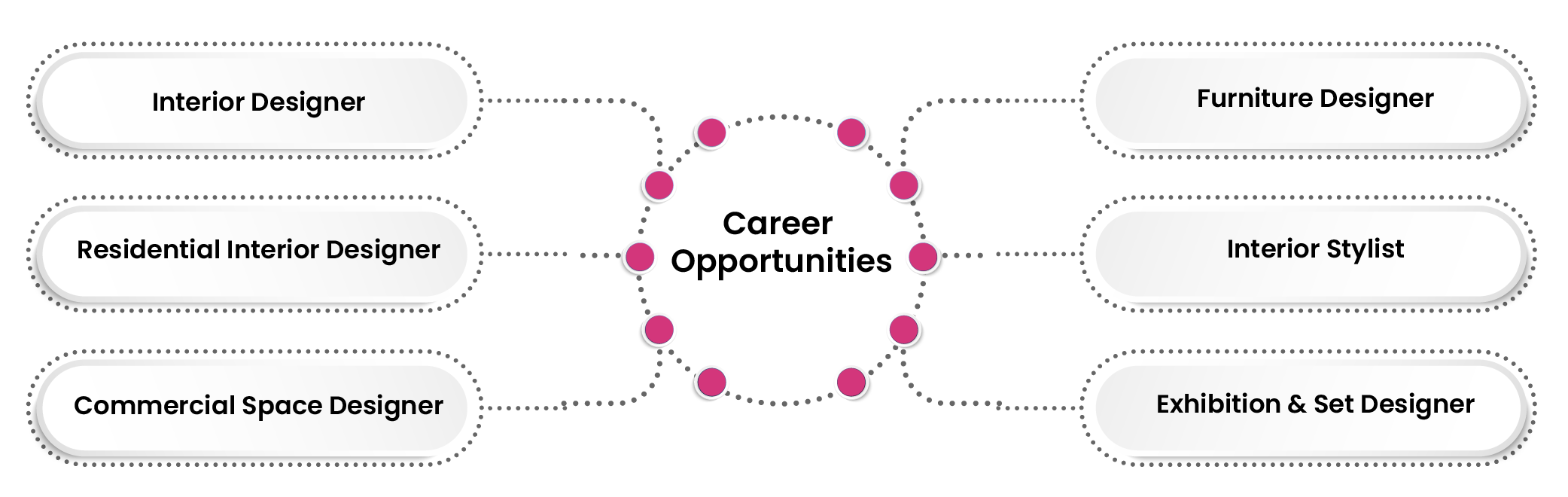
What Career Opportunities Can Students Pursue?
Graduates of the M.Des. / P.G. Course in Interior Design at LISAA are equipped with a versatile skill set that opens doors to a wide range of career opportunities within the design industry. With a strong foundation in both creative and technical aspects of interior design, students can explore roles across residential, commercial, retail, and experiential spaces. The program prepares learners to adapt to evolving industry trends, work across multidisciplinary domains, and even pursue entrepreneurial ventures, enabling them to build dynamic and future-ready careers like:
Frequently Asked Questions
What specializations can I explore after a M.Des. P.G. Course in Interior Design course?
Students can explore areas like residential design, commercial interiors, furniture design, lighting design, and spatial styling depending on their interests.
What is the eligibility for an M.Des. P.G. Course in Interior Design?
Most programs require a bachelor’s degree, preferably in design or a related field, along with a basic understanding of creative concepts.
Will I get exposure to different types of interior projects under the M.Des. P.G. Course in Interior Design course?
Yes, students work on a variety of projects including residential, retail, and commercial spaces to gain diverse experience.
Can I switch to interior design from a non-design background?
Yes, with the right guidance and dedication, students from diverse backgrounds can successfully transition into interior design.
Will I work on real interior spaces during the course?
Yes, most projects are designed to simulate real-world scenarios, helping students understand practical challenges and design solutions.
What makes LISAA’s Interior Design course industry-relevant?
The M.Des. P.G. Course in Interior Design focuses on practical learning, real-world projects, and skill development aligned with industry requirements.